Version MVP 0.3
Overview
The MVP 0.3 release is aimed at optimizing the system architecture and improving security and the convenience of device management. This update implements key features: remote lock and data wipe, a local certificate authority, security policies, client event logging, and a number of others. Configuration capabilities have been expanded. Work has been done on optimization, security, and UX design of the administrator panel.
Key features
1. Architecture optimization for high load
In this release, the architectural components were extensively reworked to ensure stable operation under the increased load typical of pilot deployments.
2. Remote lock and data wipe on the device from the MDM console
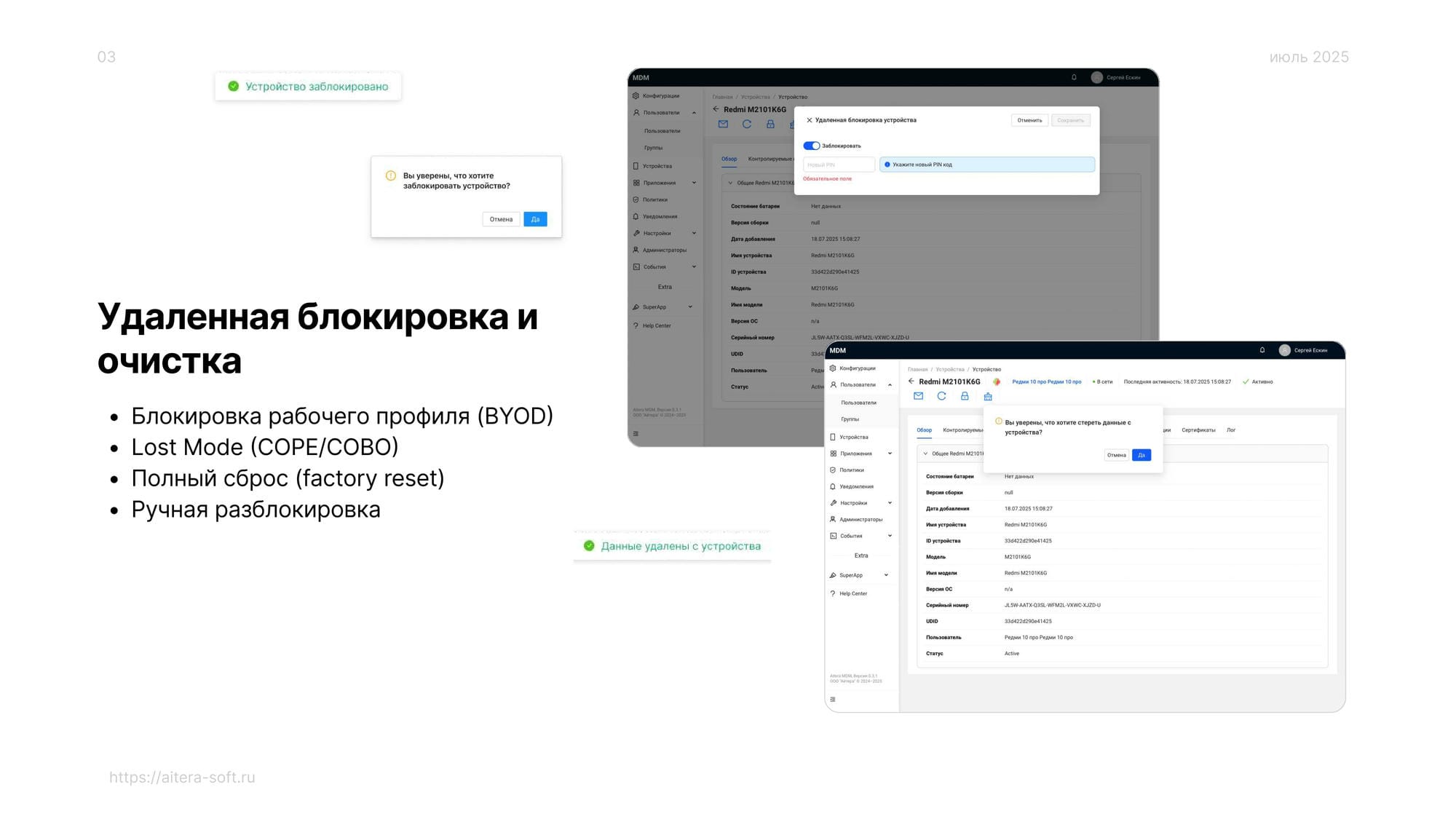
The administrator can remotely:
- Lock the device.
- Wipe data from the device. Unlocking is possible only manually through the administration console.
Documentation is available here:
3. Local certificate authority (CA)
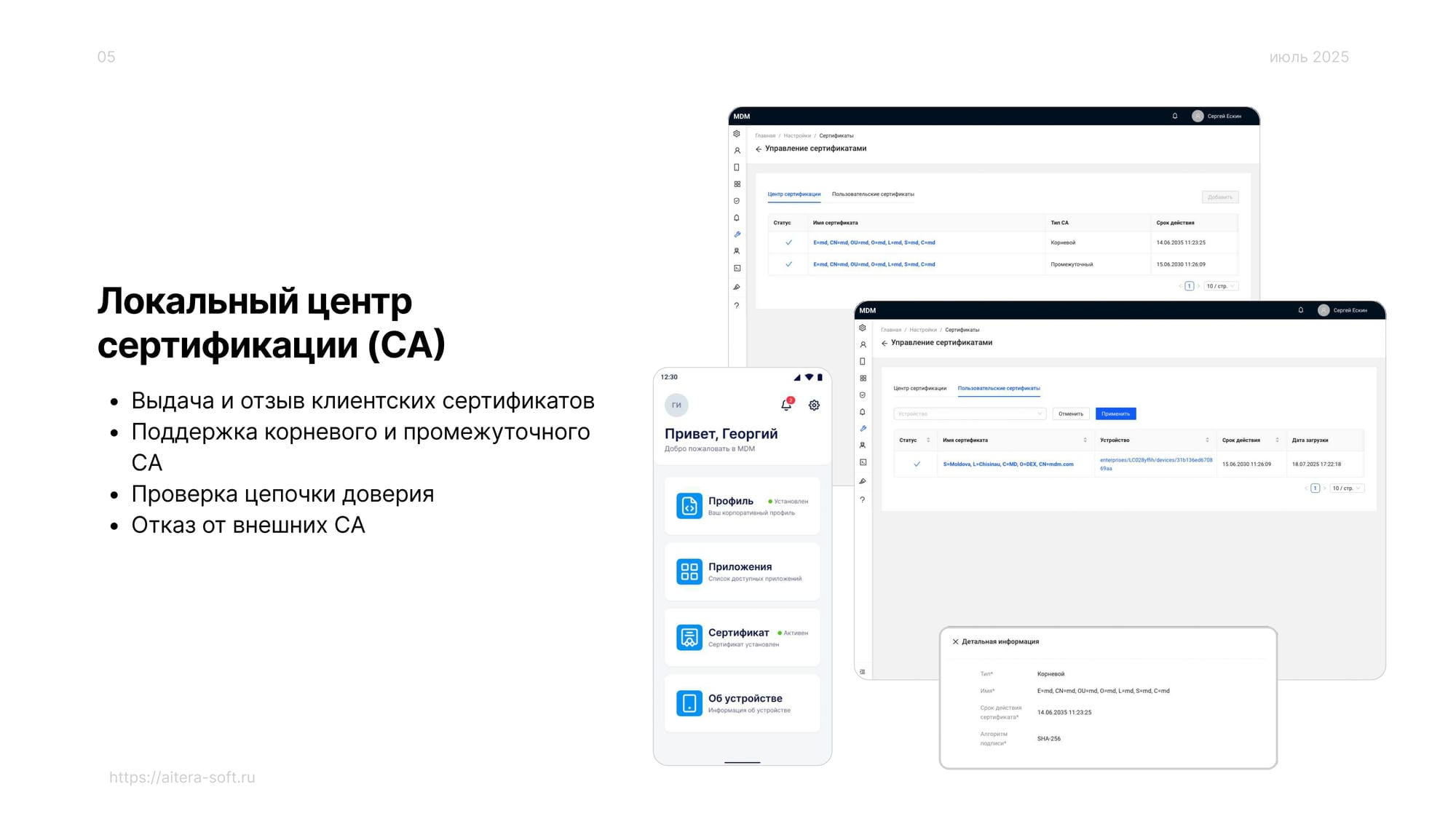
- Added the ability to issue internal certificates for mutual client and server authentication.
- Eliminated the need to interact with external CAs — the entire certificate infrastructure is maintained within the company.
- Added UI alerts and action restrictions when a certificate is missing or expired.
Documentation is available here:
4. LDAP 2.0
The LDAP synchronization module has been updated, and new capabilities have been added for administrators:
- Synchronization history.
- Manual synchronization start.
- Automatic synchronization on a schedule.
- The ability to temporarily disable LDAP without deleting its configuration.
5. Security policy compliance monitoring
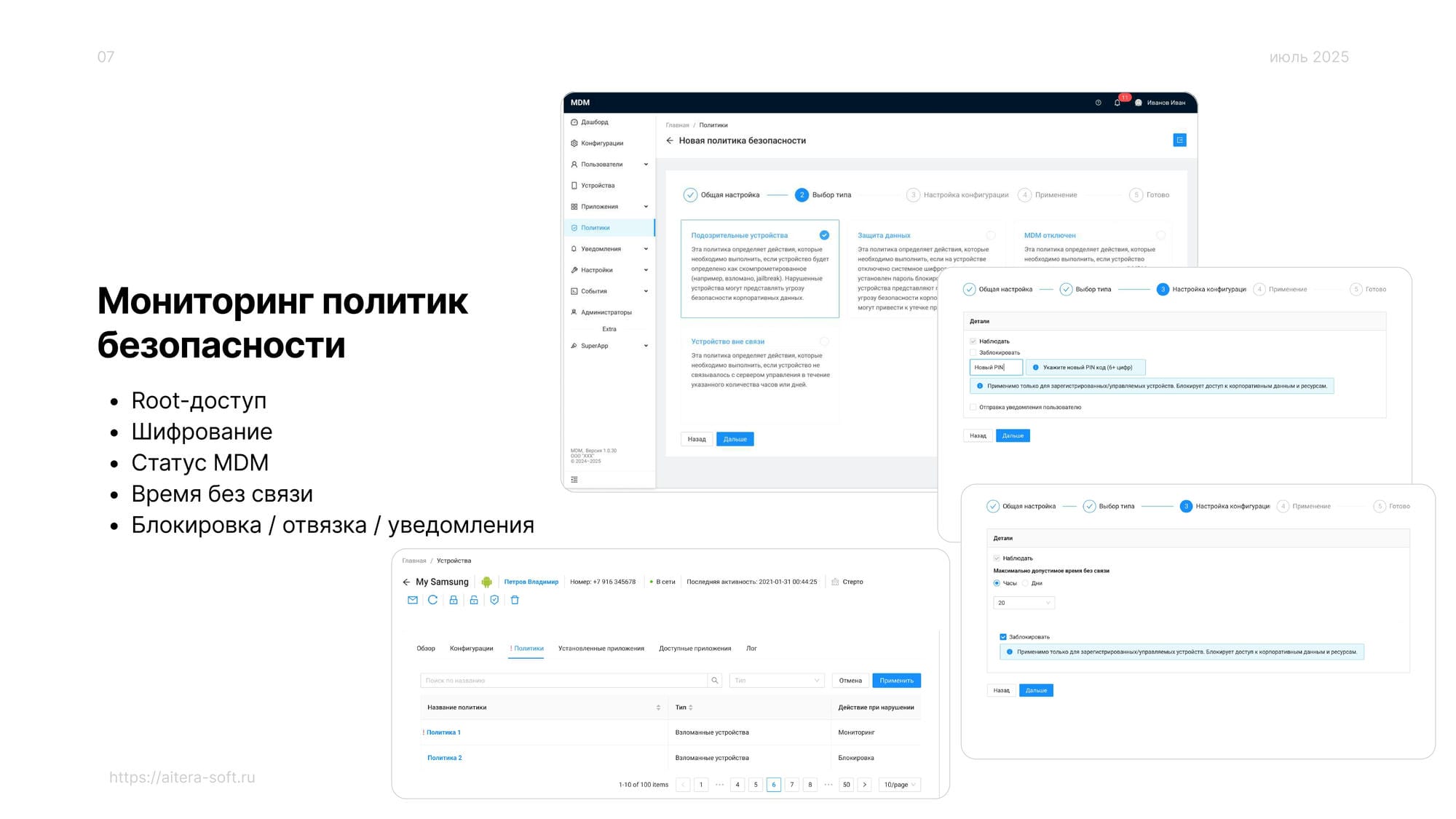
This release implements a system for monitoring compliance with security policies on Android devices and automatically responding to detected violations.
- Policies: detection of root access, lack of encryption, MDM disabled, loss of contact.
- Responses to violations: locking the device, unlinking from MDM, violation notifications.
- Interface: display of active policies, violations, and events.
6. Firebase integration for push notifications
Push notification delivery for Android based on Firebase has been implemented.
- Support for silent push for background updates of the device status.
- Added a mechanism for tracking the device state (online/offline).
7. Device event logging system
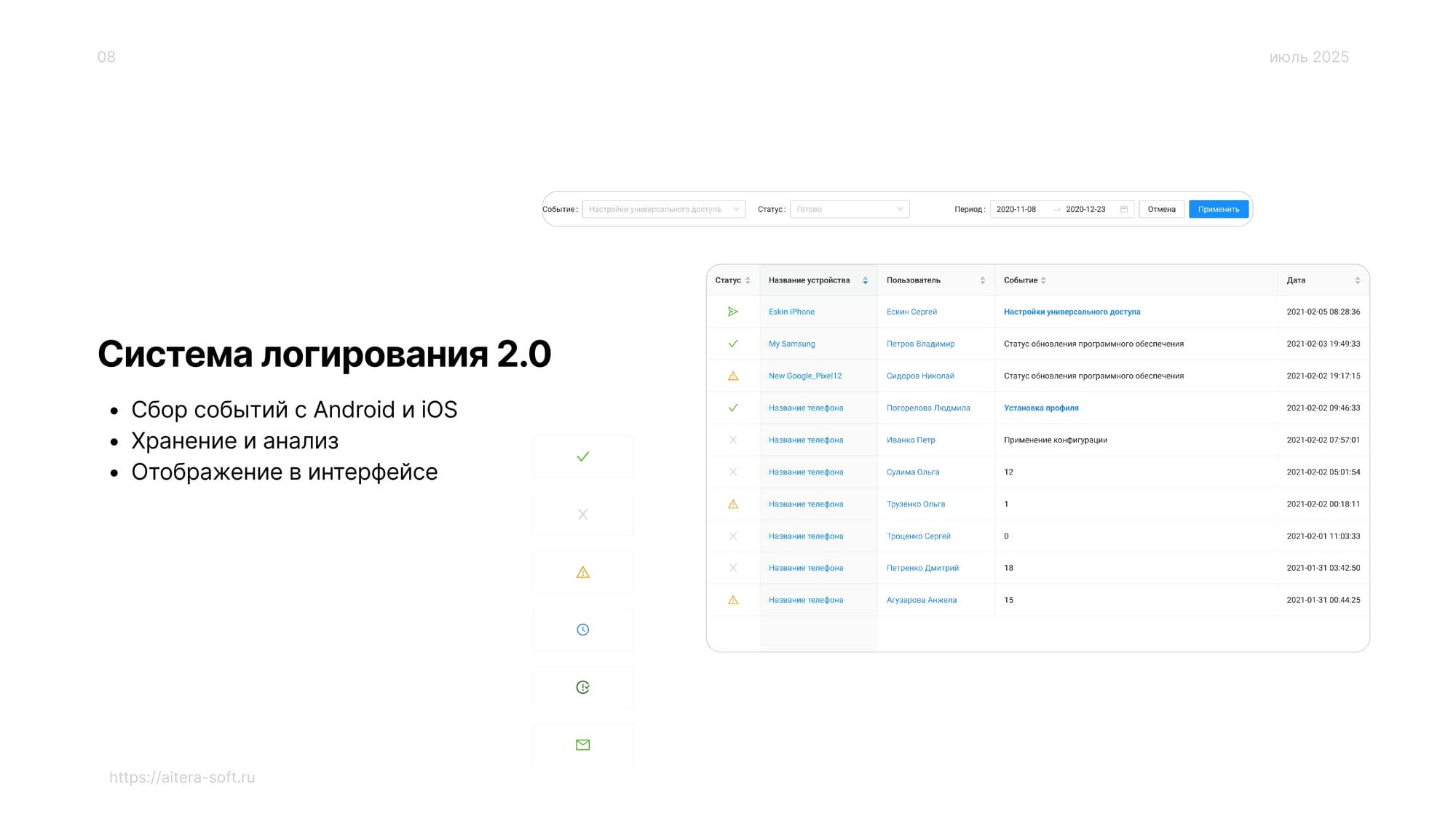
Part of the new architecture for centralized logging of client events has been implemented:
- A separate service, “Client events”, has been created for collecting and processing data about actions on devices.
- Support for logging on Android and iOS.
- Integration with the silent push mechanism has been completed for prompt retrieval of current device statuses.
- Priority event categories for display have been defined (profile installation, configuration application, MDM agent actions)
Configurations
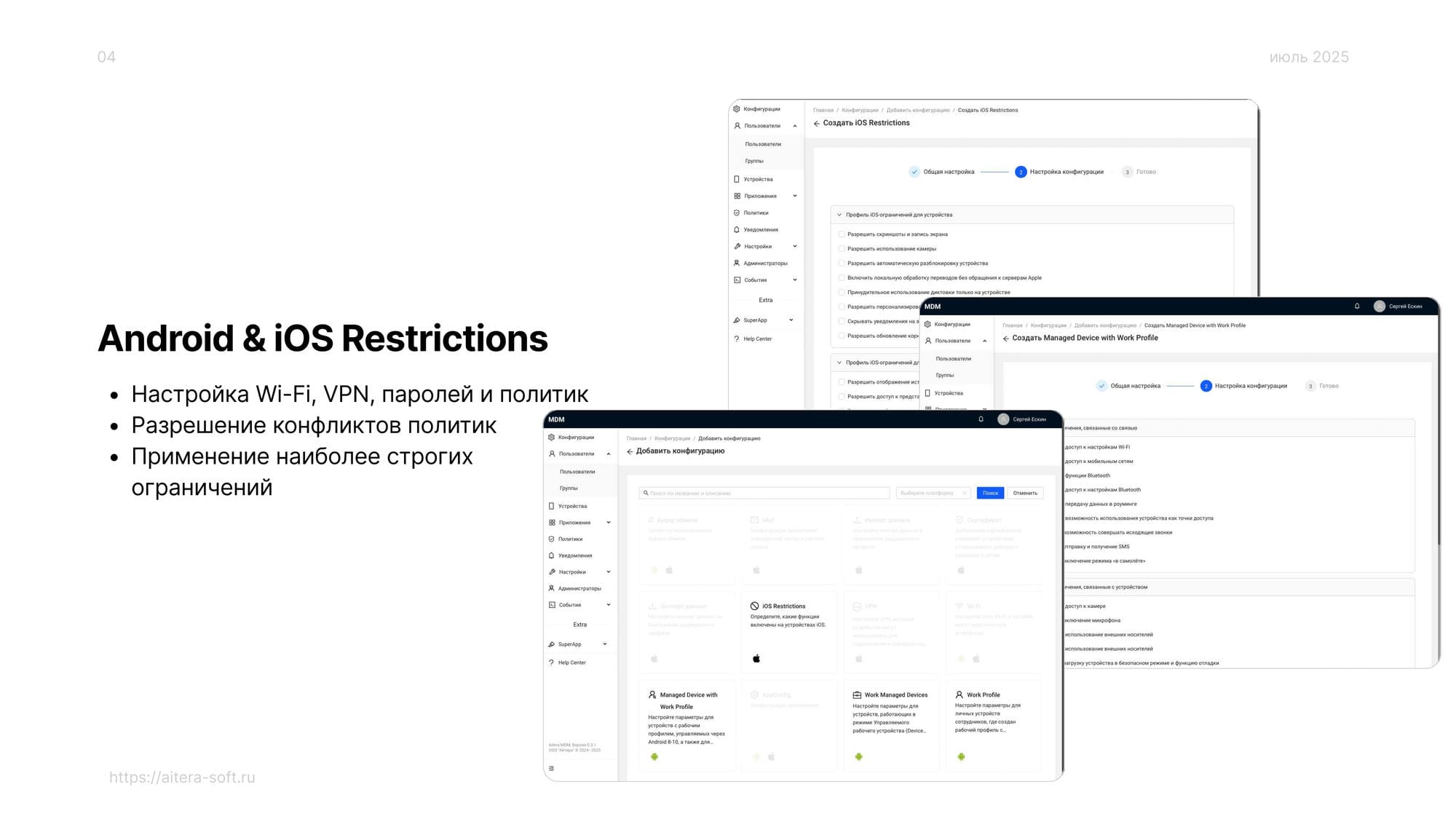
8. Android Restrictions & iOS Restrictions
- Added full support for configuring devices through MDM:
- iOS : configuring Wi-Fi, VPN, passwords, accounts, restrictions, and other parameters using MDM profiles.
- Android : managing network settings, policies, passwords, security parameters, and other functions.
- Implemented conflict resolution logic between policies, including priority application of the strictest restrictions.
9. Bulk configuration updates and control of their applicability
- Added the ability to centrally manage configurations with flexible control over their application.
10. Configuration conflict handling
- Systematic work has been done to handle possible conflicts between different configurations.
System improvements
This stage also included enhancements aimed at improving usability, stability, and security:
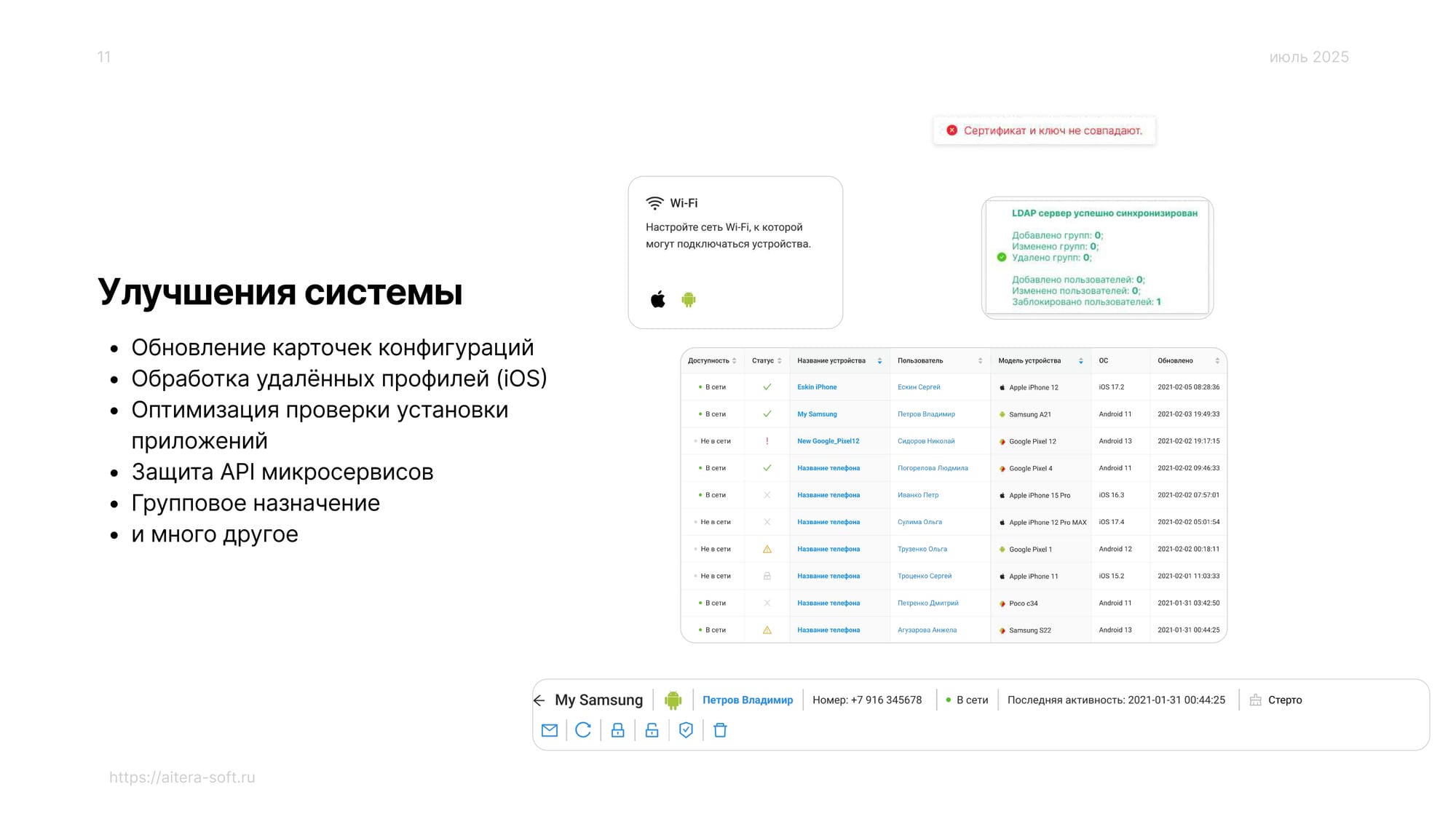
11. Updated configuration cards.
- The design and element display logic have been updated.
- Readability and access to important data have been improved.
- Added search and filtering by name, templates, and groups.
- Interaction has been optimized when working with a large number of configurations.
12. Handling of removed work profiles (iOS):
- Added automatic clearing of the device name and its removal from the system when the work profile is uninstalled.
13. Optimization of application installation checks (iOS):
- Stability has been improved and response time reduced when checking for installed applications.
14. Strengthened microservice security:
- All API methods are protected by mandatory authorization, which has raised the overall security level of the system.
15. Organization of the MDM Help Center
An internal help space has been created — a help center for the MDM platform.
- Structure. Includes sections for the key modules.
- Instructions. Instructions for deploying the system have been prepared.
- Interface. The display of sections, tables of contents, and formatting have been configured with usability and user experience in mind.
Conclusion
The MVP 0.3 release was an important step in the development of the MDM system as a reliable enterprise solution. Thanks to architecture optimization, new security mechanisms, and configuration management, the system is ready for scaling and production use.